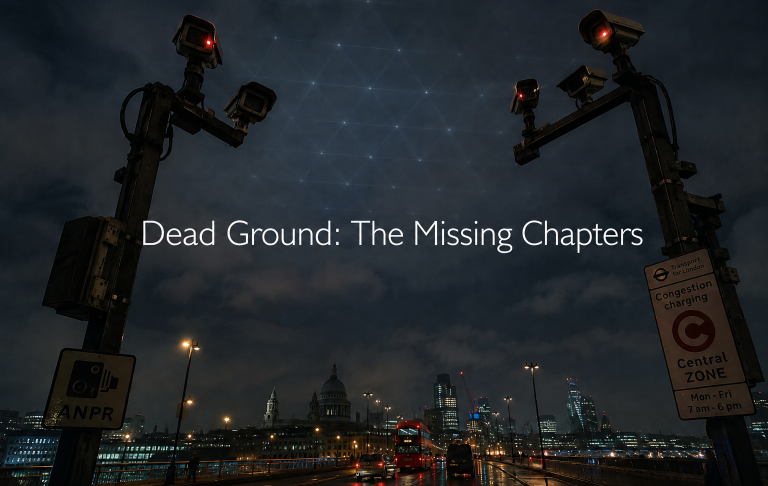
Dead Ground
Dead Ground is a work of fiction. Ray Garland is not me. But on the morning of 17 February 2003, I was in the London Traffic Control Centre when the Congestion Charge went live — and the photograph on this page is real.
Everything I know about ANPR architecture, adaptive signal networks, and the particular texture of watching a city's nervous system come online under pressure went into this story.
The technology in the novella works because I spent forty years helping to make sure the real thing worked.
— P. Callaway
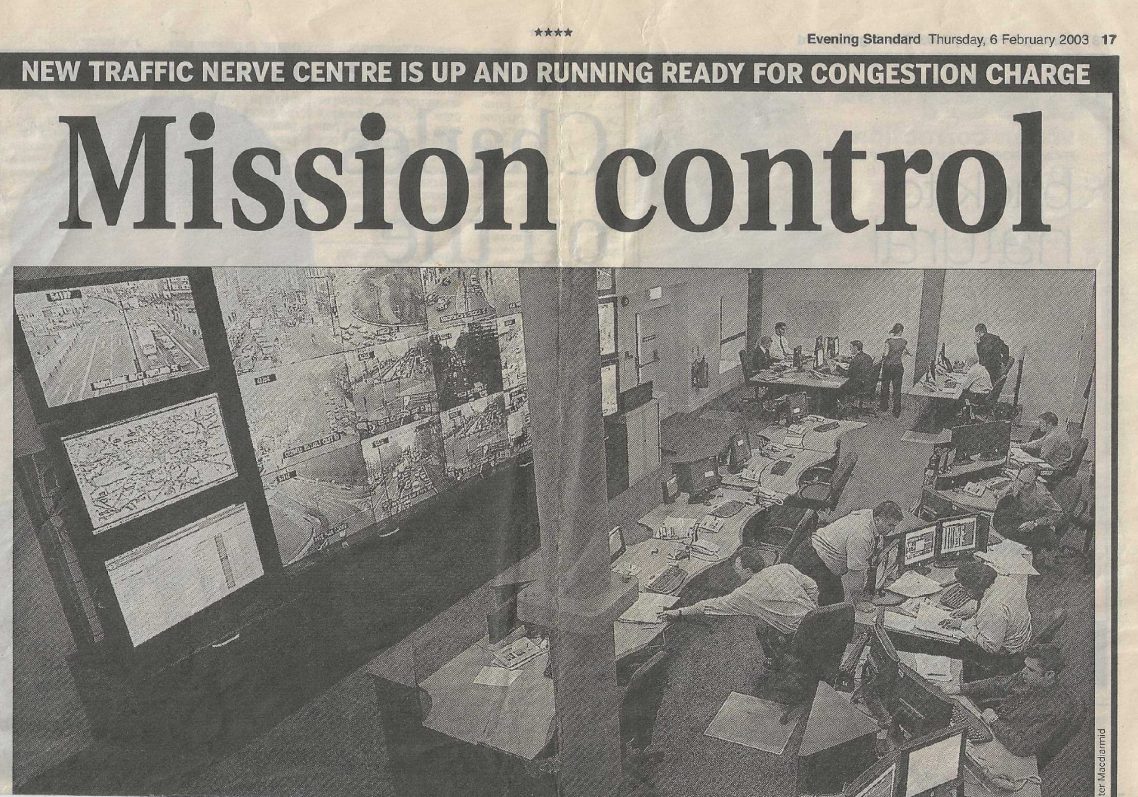
"Evening Standard, 6 February 2003. The author is the figure leaning across to the table behind."
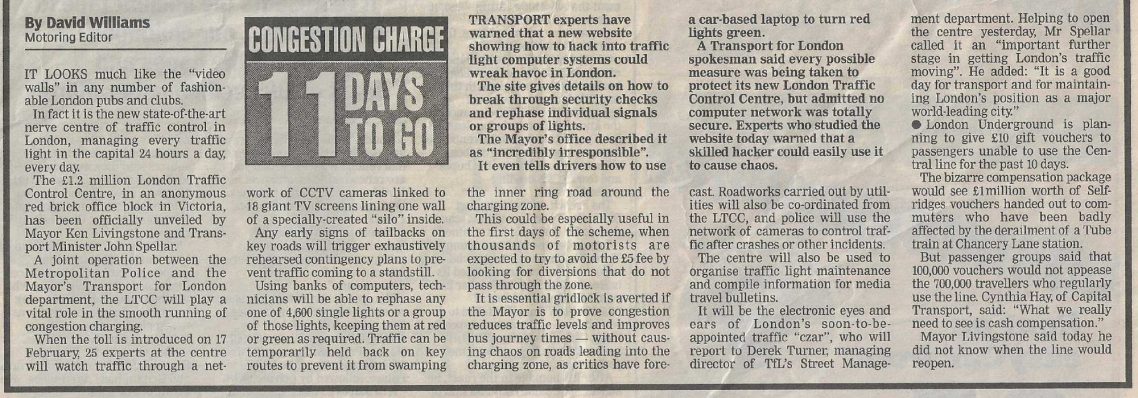
With just 11 days to go, questions were being asked about how secure the system was. What if it all happened before the equipment was installed?
The document below is what Webb decoded. I'll leave you to decide how much of it to believe.
When the Congestion Charge went live on 17 February 2003, London's traffic nerve centre wasn't the gleaming, purpose-built operations hub you might imagine.
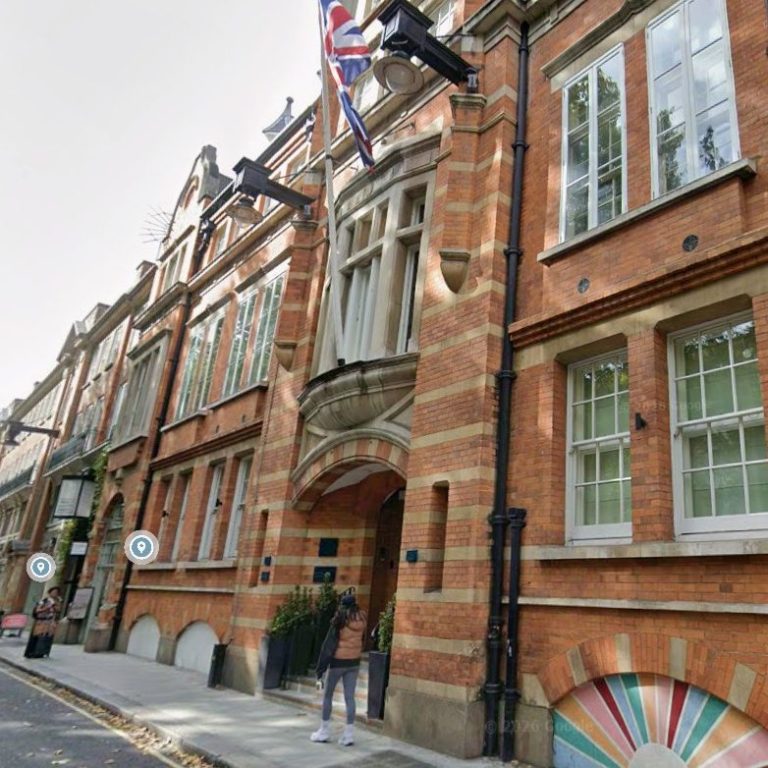
It was tucked behind 25 Eccleston Place — a nondescript address in Victoria, right alongside the inbound approach to Victoria Coach Station.
The control room itself occupied a large open-plan warehouse space set back from and below the main building: functional, unglamorous, and humming with the particular tension of a team about to throw a switch that would change how an entire city moved.
There was nothing sleek about it. But on that morning, with the cameras live and the first charge-zone vehicles already being logged, it was the most important room in London.
It bears almost no resemblance to the Control Centre TfL operates today.
Congestion Charging 2003 - London Traffic Control Centre - 25 Eccleston Place
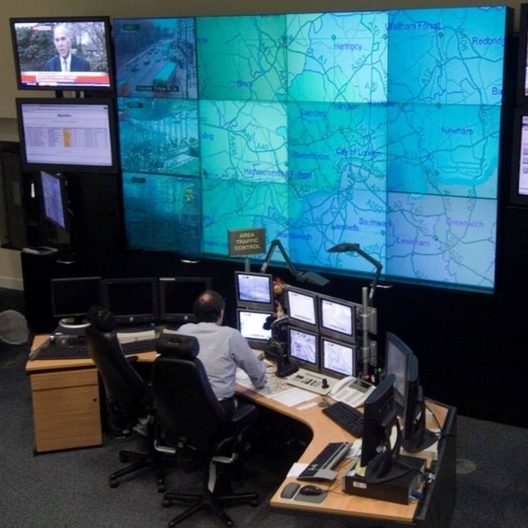
The scale of what was being attempted on 17 February 2003 was, by any measure, extraordinary.
The charge zone covered just 21 square kilometres — a little over one percent of Greater London — yet the infrastructure required to police it was unlike anything the city had ever built.
An ANPR camera network capable of reading and processing millions of number plates every single day had to be created largely from scratch, cross-referencing each plate against a live payment database in real time.
Many experts publicly predicted the system would fail on day one. It didn't.
Before the charge, average traffic speeds in central London had fallen to just over 10 miles per hour. The projections without intervention were worse still. The £5 daily charge — paid online, by phone, or at retail outlets across the city — was radical enough that fierce opposition came from motorists, businesses, and politicians alike. Nobody was certain Londoners would comply.
They did. Within a year, traffic delays inside the zone had fallen by 30 percent. There were 65,000 fewer car movements through the charging area every day. Around 110,000 payments were being processed daily. Bus routes serving the zone were experiencing 60 percent less disruption.
The call centre, overwhelmed with 167,000 calls a week in the opening days, had settled to a steady 70,000.
The cameras had worked. The system had held. London had changed.
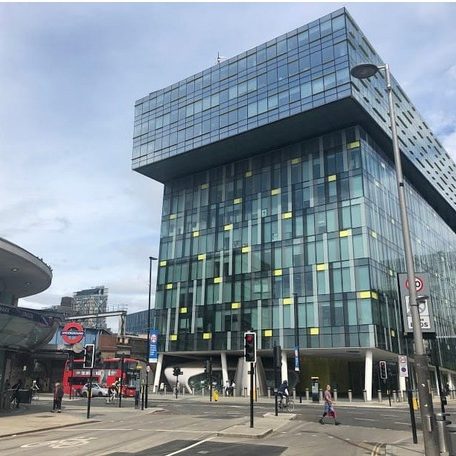
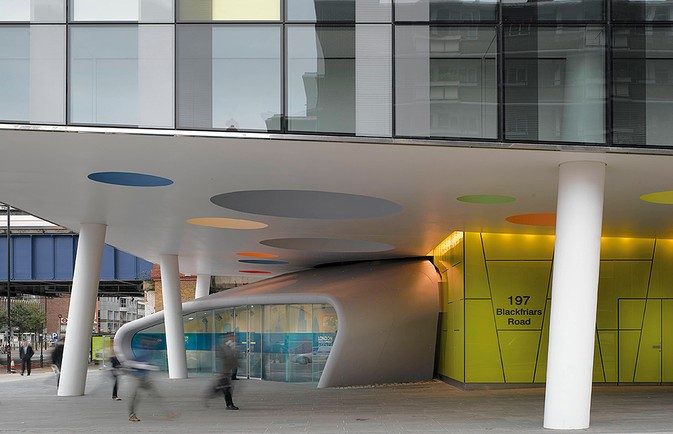
Palestra is the current headquarters of Transport for London (TfL), situated at 197 Blackfriars Road, London, SE1 8NJ. It is located directly opposite the Southwark Underground Station (Jubilee Line).
Palestra is not a subtle building.
Designed by architect Will Alsop and completed in 2006, its top three floors form a dramatic cantilevered box that projects out over the raking glass façades below, the whole structure held aloft by a series of angled columns above the entrance.
Eleven storeys, 37,400 square metres, winner of the 2007 RIBA National Award.
When Transport for London took its 20-year lease on the building, 2,500 staff moved in across ten floors. It became, quietly, one of the most technologically ambitious office buildings in the country.
The sustainability credentials alone set it apart. The roof carried a 63-kilowatt photovoltaic array and fourteen micro wind turbines. Rainwater was harvested for toilet flushing. A combined cooling, heat and power system managed the building's energy load.
But the detail that distinguished Palestra from every other office building in the United Kingdom was its hydrogen fuel cell — a 200-kilowatt unit that made Palestra the first building in the country to have one fully integrated into its structure. It supplied power to half of every office floor. It was, at the time, a genuine engineering landmark.
The fuel cell was eventually put into stasis. The model is no longer manufactured. TfL located an identical unused unit elsewhere in the UK and acquired it — not to install, but to keep as a source of spare parts for the dormant original.
Somewhere in Palestra, a 200-kilowatt hydrogen fuel cell sits silent, maintained, and waiting.
For readers of Dead Ground, that last sentence will need no further explanation.
— P. Callaway
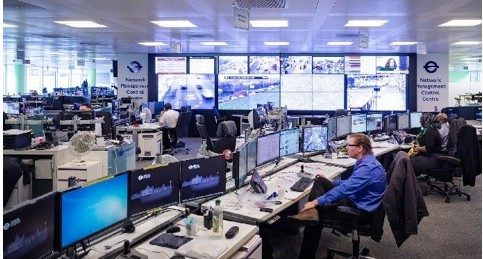
Beneath every set of traffic lights in London lies a system most drivers have never heard of.
SCOOT — Split Cycle Offset Optimisation Technique — was first developed by the Transport Research Laboratory in 1979 and has been the invisible intelligence behind London's signal network ever since.
London has around 6,000 traffic signals, and SCOOT continuously adjusts their timing second by second in response to live traffic conditions, delivering on average a 12 percent reduction in delays and an 8 percent reduction in the number of times vehicles have to stop.
It has since been deployed in over 250 cities worldwide. Most people sitting at a red light have no idea the system is watching, calculating, and quietly reorganising the flow of the city around them.
The author spent a significant part of his career installing SCOOT nodes across London and Surrey — physically placing the infrastructure, then calibrating and validating each network to ensure it performed as intended.
That work extended to integrating SCOOT with iBUS, TfL's Automatic Vehicle Location system.
iBUS tracks all of London's 8,000 buses to an accuracy of around ten metres, using that positional data to trigger bus priority at traffic junctions across the network — a seamless handshake between two systems, passing data invisibly through the city's arteries. iBUS also underpins the calculation engine behind £2 billion in annual payments to London's bus operating companies, and carries over 30,000 pre-recorded announcements across 700 bus routes.
When Ray Garland looks at London's signal network in Dead Ground and understands instinctively where the anomalies are hiding, that knowledge comes from somewhere real. The infrastructure in the novel works because the author spent forty years making the real thing work.
SCOOT
iBUS — the real-time bus tracking system referenced throughout Dead Ground. This is what it looked like.
Video courtesy of 'Network Nathan'